The Populist Paradox: Getting Beyond the Hate

The election of Donald Trump has its dark trans-Atlantic parallel in the rise of right-wing movements across Europe; we are facing a disturbing international phenomenon, and figuring out its roots as well as its national variations will be key to stopping and reversing this trend towards authoritarian, racist, anti-Muslim, and anti-Semitic politics.  To this point, the New York Times has a complementary pair of stories this week about the growing electoral prospects of the far right in both France and Germany via the growth of the National Front and Alternative for Germany.  Both offer good on-the-ground reporting as well as larger insights about what is and might be going on.

Populisms of both the right-wing and left-wing varieties are on the rise around the Western world: in the United States, not just Trump but Bernie Sanders succeeded beyond the wildest mainstream imaginings this past election cycle.  And in Europe, left-wing movements have prominently arisen in Spain and Greece.  Whether on the right or left, these trends have generally been observed to be a response to economic inequality and stagnation, a sense of powerlessness among voting populations, and a feeling that an economic elite has gained too much power.

In some ways, an optimist might look at a party like Marine Le Pen’s National Front, and see that this is a movement with real differences from what we’re used to thinking of as conservatism in the United States.  There’s much more talk of economic equality, more consideration of things like protecting benefits that seem to partake more of socialism than any free market ideology.

But as is described in studies and books (such as in John Judis’ recent The Populist Explosion), right-wing populism often identifies an “other” beyond monied interests as part of the problem, such as immigrants who are taking away jobs, to explain the economic difficulties their country faces.  And indeed, the right-wing populist situation in both Germany and France involves the increased mainstreaming of a chilling and hateful scapegoating of vulnerable minorities; the photo of National Front members with a poster showing France subdued under the shadow of minarets is particularly nauseating and emblematic of the nastiness involved.  (The notion that France is under some sort of imminent threat of occupation by marauding Muslims becomes even more fraught when you stop to consider the various French interventions in the Muslim world over the past several years, including in Mali, Libya, Iraq, and Syria.)

A right-wing populism that claims to oppose inequality, economic stagnation, and the power of elites, but that riles up its voters by scapegoating immigrants and religious minorities as being equally responsible for their discontent, carries the threat of establishing a nasty, illiberal status quo that ends up solving no real economic problems, and enabling greater persecution of vulnerable populations as politicians double down on this one “threat” they can more easily exert some control over — as opposed to, say, truly challenging entrenched undemocratic power.

The central complication is that, just as in the U.S., the populist right nonetheless has identified, and promises a response to, a definite economic malaise, where parties in the center and the left are perceived to have failed.  On the one hand, there is a fundamentally democratic element in saying that ordinary citizens should have more control over their economic destiny; after all, drawing a line between where democracy ends and economics begins has in some ways been the central conundrum of our age, and is at the root of many of our greatest problems.  But as we see in the United States, this democratic notion has been dangerously tied an authoritarian solution, in which Donald Trump would act on behalf of the people to make things right, even if it means asserting maximal powers and subverting other institutions of government, such as the courts.  (In contrast, witness Bernie Sanders’ many assertions about ordinary people needing to get involved with politics, and his followers' moves to take over the Democratic Party from the bottom up.  For Donald Trump, there is only politics from the top down.)

Both articles in the Times raise a central irony — the way that the right in France and Germany has subverted something that makes those countries admirable — taking in millions of refugees and other immigrants from outside the E.U. — by using this humanitarianism to drive fears of a racial and religious invasion by outsiders.  (And of course, it’s not just humanitarianism that has led France and Germany to welcome immigrants — these newcomers have also created many benefits for the economy, as they have also done in the United States.)  The idea that a relatively small group of immigrants could somehow cripple and undermine German and French society also raises the question of how little faith the Germans and the French have in their own cultures and societies: to an outsider, it seems far more likely that the dominant culture would absorb the newcomers, rather than the other way around.  And if there are issues with immigrants not integrating into their new societies, surely there are productive remedies for dealing with this; it’s obvious that demonizing newcomers is the opposite of welcoming them.

And yet, this fundamental insecurity about the strength of their societies exists.  On the one hand, all this scapegoating of dark-skinned immigrants who take people’s jobs seems like displaced aggression against the intra-European immigration that has been enabled under the European Union, in which citizens of one EU member can cross borders without fuss and work in another country.  The fears of cultural assault associated with these non-European immigrants likewise seems to be tied to fears of losing national identity on account of the European Union.

There is also the intriguing possibility raised that Germany is particularly, and ironically, susceptible to nationalistic, xenophobic appeals because of its post-WWII policy to downplay nationalism; one interviewee suggests that this lack of identity has left people feeling an “inner emptiness.”  Germany is one of the most extreme examples possible regarding issues of nationalism and identity, and the fact that even conscious attempts to move beyond nationalism are facing such challenges calls for close consideration.

But here I will use the extreme to pivot to what is, at least for me, one of the most important questions to answer in this time of political peril: How can a truly democratic politics energize people without resorting to nationalistic appeals that seem to so easily slide into xenophobia, racism, and religious discrimination?  Another way of putting this: How does the left compete with a right-wing vision that’s so very comfortable with demonizing not just immigrants, but even other citizens, to rile up its supporters?  Because what we are seeing in Europe right now appalls and frightens me — I have trouble comprehending that a continent that experienced the Holocaust would, within living memory of that horror, see the rise of politicians who thrive on religious hatred and demagoguery, deploying not just anti-Muslim slander, but anti-Semitism as well.  It can’t just be about stopping these movements; it has to be about how we create a politics, and a society, that makes these movements unthinkable and taboo.
Time to Swat Down Civil-Rights Smashing SWAT Team Use

The New York Times has an extremely important and disturbing investigative piece in today’s paper about the use of SWAT teams to execute low-level search warrants across the nation, a practice that has led to the deaths of dozens of Americans, and the terrorization of thousands.  It’s a problem that wouldn’t be happening without a breakdown of legal restraints, a demented “war on drugs” now entering its umpteenth decade, and a massive dearth of common sense; the article also cites Supreme Court decisions and lazy judges as part of the background.

But there’s also an overarching class and racial dimension that is sitting in plain view: this is something being done disproportionately to lower-income citizens, and to people of color.  It summons a vision of two nations: one where citizens go about their daily business without fear, a second one where any evening a militarized police squad will break down your door, toss in a few flash-bang grenades, and gun down your family dog.  More than this: it summons up nothing less than the vision of U.S. troops busting into houses in Iraq and Afghanistan.  Since when are American citizens treated like possible insurgents in the (deeply immoral and counter-productive) war on terror?  The war on drugs continues to amaze and appall with its ability to descend to new extremes and cruelties.  

Widespread drug use and addiction are clearly fed by the harsh economic realities faced by increasing numbers of Americans, not by some sort of growing moral failure; witness the rise of opioid addiction that is now decimating communities across the rural U.S.  But on top of the injuries of joblessness and drug use now comes this third plague: over-the-top policing and avoidable harm to innocents.  

And it turns out that the proceeds of the drug seizures usually go to the police departments, providing another perverse incentive for this brutalizing activity to continue.

In a small sign of hope, it turns out that a lot of police are deeply skeptical of this tactical approach to serving warrants, including the National Tactical Officers Association.  In fact, one of the idiocies of this SWAT approach is that it unnecessarily risks the life of police officers for the sake of relatively low-level offenses.  Clearly this is not a better known issue than it is because it’s affecting the least powerful members of our society.  But if progressives are serious about revitalizing our democracy and making it work for everyone, no matter your income bracket, stopping this demented reign of terror against non-violent criminals and innocent bystanders needs to gain much higher priority.

Trump Drags U.S. Allies Into Deranged Vendetta Against Barack Obama

This past week, we’ve had the non-privilege of not one but two significant and telling snubs of close U.S. allies by the Trump administration.  First, in the White House’s continuing hapless efforts to defend Donald Trump’s false claims that President Obama had him wiretapped, Sean Spicer referenced a story from Fox News that claimed Obama had used British intelligence to do the alleged deed.  The Brits have pushed back vigorously, although despite some muddled reports to the contrary, the White House has not officially apologized to the U.K.  Angering our closest ally should be reckoned as collateral damage in the ever-more-deranged effort to slander Barack Obama for non-existent crimes, and another indication of how Donald Trump places the interests of Donald Trump ahead of those of the country.

The second incident was the one-two combo that happened in Donald Trump’s meeting with Angela Merkel.  Trump initially was unwilling to shake Angela Merkel’s hand, which is a fine treatment for the leader of another country closely allied to the United States.  More significant, though, was Trump’s comments later in the meeting that Merkel and Trump shared in common the fact that they had both been wiretapped by Barack Obama, alluding to the disclosures sparked by Wikileaks releases in 2015 that the U.S. had listened to Merkel’s phone conversations.  Pretending to have found a point of commonality with Merkel, Donald Trump in fact re-visited a sore spot in U.S.-German relations for the purpose of impugning Obama in a guilt-by-association manner - the U.S. eavesdropped on Germany, so it did the same to him - in pursuit of his dangerous vendetta against the former president.  Again, he chose to damage our relationship with an ally to serve his own personal, and delusional, purposes.

In both of these incidents, we need to constantly be aware that it is not just Trump’s reputation, but the reputation of the United States, that is being damaged.  This may seem abstract to most people, but alienating friends can do immeasurable damage if it begins to affect their willingness to trust the U.S. and cooperate with us on issues that affect us all, from economic issues to terrorism and the environment.  I worry we are still in the beginning stages of the damage that Trump is doing, when it all just seems like so many words to most people, with the concrete, pernicious effects to be seen months and years down the line.

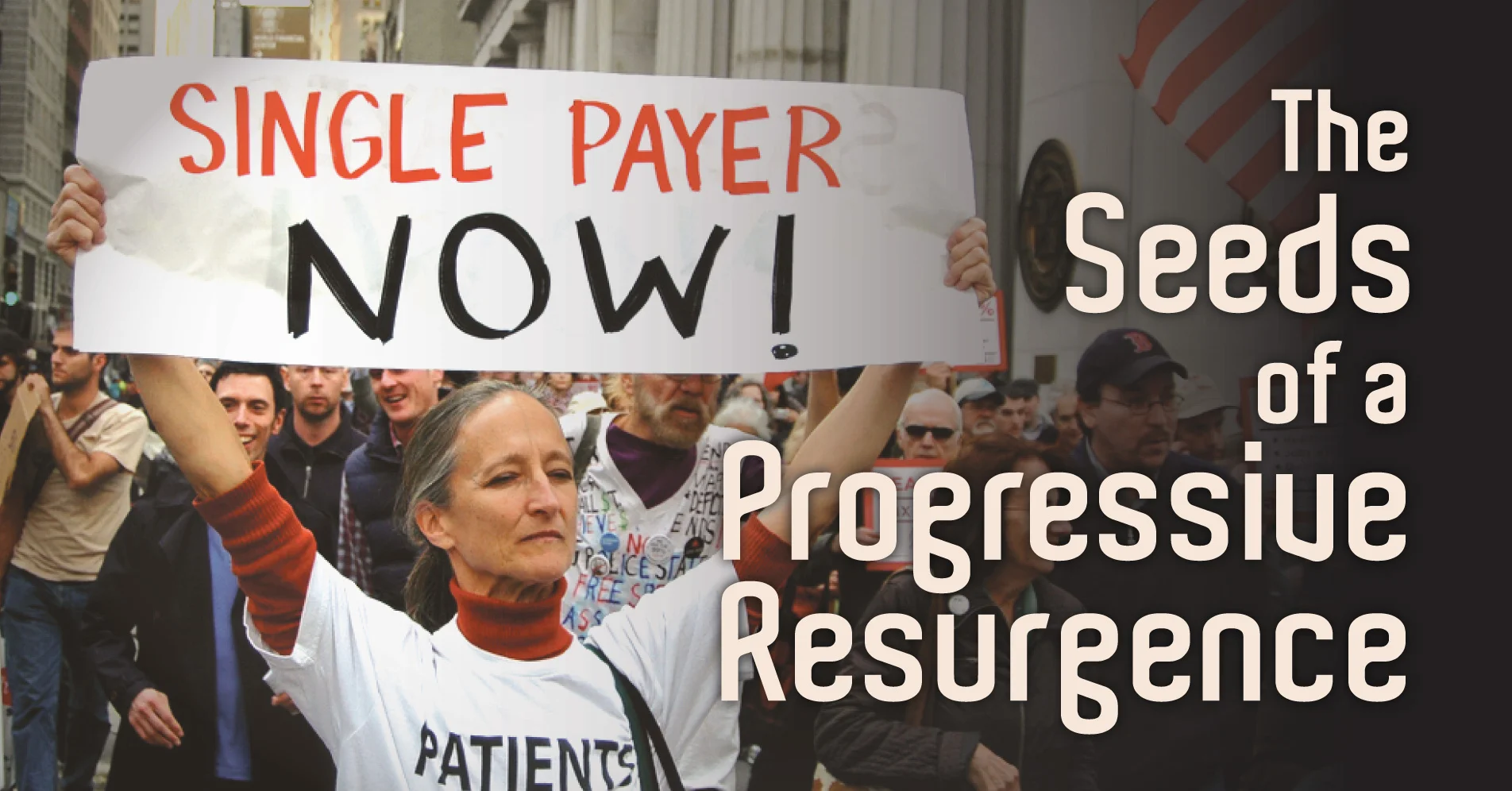
Does Health Care Debate Carry the Seeds (Germs?) of a Progressive Resurgence?

The future of Obamacare and the odds of the Republican-drafted American Health Care Act passing in some form have been the dominant political story for the last week and a half now.  The compressed debate and the fact that the new law is meant to do away with Obamacare have combined to capture my attention and interest in a way that the year-long-plus debate over the Affordable Care Act never quite did; call this my own personal silver lining in an otherwise ugly situation, in which the health care fate of literally millions of Americans hangs in the balance.  

The movement of the political discourse into a variety of detailed questions around the provision of health care raises a very important caveat about what has seemed to be Donald Trump's ability to dominate the political scene.  In the realm of broad strokes and sucker punch tweets, Donald Trump can act like a king; but in the nitty gritty world of legislation, he's just one of the guys (and apparently not very competent).  No amount of huffing and puffing by the commander in chief can fully distract people from the very personal way in which health care affects them, and the literal life and death importance of how this legislation plays out.  Some people have made the case for "normalizing" Donald Trump by making sure to engage him on just this everyday political playing field, and I have to admit that we have some early evidence that they may be on to something.

Over at the New Republic, Brian Beutler has been knocking out a series of insightful pieces that combine analysis of the Republican legislation with the deeper history of Obamacare and how the Republicans have come to be in such a confounding and perilous pass.  This article from a couple days ago directly and indirectly hits on some larger point that few are focusing on in the heat of the moment.  Beutler dares to extrapolate from the current Republican rush to implement their own health care bill, and concludes that in jamming through a flawed bill at breakneck speed, they are opening a political space for Democrats to act with similar speed on healthcare when they return to power.

The idea that the Democrats will return to power, hopefully sooner rather than later, is in the first place an incredibly inspiriting one; yet, absent a (quite possible but less likely than not) catastrophic turn of events that cements Trump and the Republicans' hold on government still further, Democrats will in all likelihood have their turn again.  If nothing else, the Republicans' attempts to do away with a flawed but functioning, and certainly salvageable, health care law, in a way that highlights the trade-off between health care for millions and tax cuts for a rich, precious few, should serve to clarify the healthcare debate going forward.  The Republican Party can try to wish it away as much as they want, but 20 million Americans have health care because of Obamacare, which is success by even the most basic measures.   More than this — as Beutler points out, the Democrats now have open to them a pathway to implementing their preferred health care approach once they are back in the majority (particularly if the Republicans fail to pass any legislation), including de facto universal coverage. 

Although we are clearly playing defense at the moment, it is not too soon for progressives to begin articulating an alternative vision of health care for all as an answer to the cruelty and incoherence of Republican attempts to roll back the Affordable Care Act.  And health care is a microcosm (though sort of a macro as far as microcosms go!) of the larger political challenge: articulating a durable agenda that speaks to the very palpable desire across the country for real solutions to pressing problems, from the economic plight of the working class to rolling back climate change.

Offering hope rather than fear has always been the likelier road to success in American politics; Donald Trump may be feeding off and fueling the energies of a rancid, zero-sum, white nationalistic movement that is deeply rooted in our undemocratic economic arrangements, but it will sooner or later put him at a great disadvantage when faced with a reality-based, optimistic vision for economic fairness and respect and equality for all.

A Brief Observation on the Fundamental Weirdness of This Health Care Moment

As we've seen over the last week, the Republicans' proposed Obamacare repeal bill is a bit of a clusterf*ck.  It's already aroused opposition from House conservatives and a group of Republican senators.  Major medical groups have announced their opposition, and almost needless to say, the Democrats are not on board.  Some are now speculating the bill was actually designed to fail, as a way to basically punt on this issue and save the Republicans from a protracted internecine fight on health care policy.  I'm not on board with this theory, but it does open up a good perspective on the fundamental strangeness of our political situation.  After all, the bill if passed would screw over literally millions of people who voted for Trump, to whom he promised even better health care than ever, and no changes to Medicare or Medicaid.  And whether failure was baked into the bill, or whether failure is seen as a possibility, you can see Trump positioning himself, as only Trump can do, by foisting failure of Obamacare on President Obama, even going so far as to say that Obama actually planned for it to fail, after he left office, for unspecified nefarious reasons.

Saturday Afternoon Non-Massacre?

Some short-lived high drama involving the refusal of U.S. Attorney Preet Bharara to resign after being asked to do so along with 46 other Obama-appointed attorneys: short-lived because President Trump has, in short order, fired him.  There's nothing unusual about the administration's request that these attorneys resign, but it is unusual for one of them to refuse.  This story is still developing, but I am guessing Bharara's refusal is connected to his previous statements in November that President Trump and Jeff Sessions had asked him to continue in his position.  Indeed, the Washington Post is reporting that Bharara was confused as to whether the request for mass resignations applied to him.

As this article details, Bharara has gone after Republicans and Democrats alike during his tenure as U.S. attorney for the Southern District of New York.  I'm particularly gratified by his willingness to take on New York Governor Andrew Cuomo, who has always rubbed me the wrong way, and whose presidential ambitions fill me with a foreboding for the sake of the Democratic Party; the party needs new blood, not someone whose advisors have been accused of bribery.  And indeed, it is not beyond the realm of possibility, as Josh Marshall notes in this post at Talking Points Memo, that Trump's initial impulse to retain Bharara is related to the fact the attorney has been going after New York Mayor Bill DeBlasio's fundraising practices (the TPM post is worth reading for its overview of the possibilities around why this firing played out like it did).

Walden Gone Wild

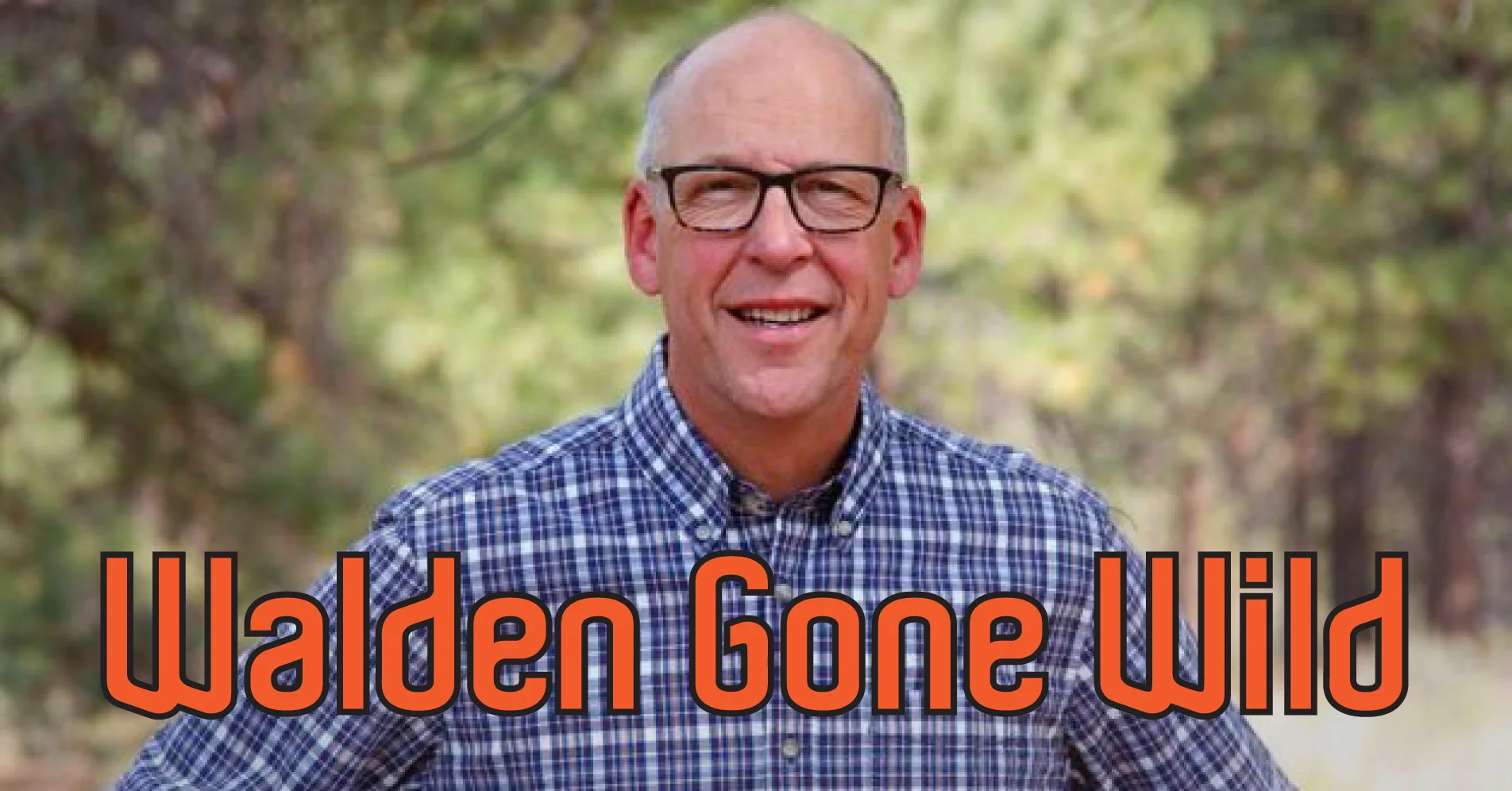
Oregonians appalled by the Republican Party’s proposed legislation to gut Obamacare and replace it with reduced coverage that will leave as many as 15 million people without insurance have been forced to face an additional galling fact: that one of their own is central to this effort to screw over millions of Americans.  Representative Greg Walden, chairman of the House Commerce and Energy Committee that is helping draft and approve the legislation, is a central figure in pushing this legislation through — despite the fact that in his eastern Oregon district, more than a third of the population is on Medicaid.

As this New York Times piece about his role notes, “[Walden] must reconcile the political goals of his party, which is committed to repealing the 2010 health law, and the interests of his state, where officials say the law has been a big success. In 2010, nearly one in five Oregonians lacked health coverage. Today, state officials say, 95 percent of Oregonians have coverage.”

The real humdinger here is that in supporting the Republican health care legislation, Walden is not at all reconciling two competing political goals — he’s embracing one, and disregarding the other.  Oregon has achieved that 95% figure in part through the mechanisms of Obamacare, including Medicaid expansions, which according to the Times cover nearly one-fourth of Oregon’s population.  But under the proposed legislation, instead of the federal government covering 95% of Medicaid costs, it will only cover 65% of them starting in 2020.  For some perspective, Oregon’s current 5% contribution, which kicked in this year and costs $350 million, is already causing budget headaches for the state.  A 35% contribution would run the state's share into the billions.  What has been a great and indeed live-saving deal for thousands of Oregonians, and for the state, paid for through taxes on the richest citizens of our country, will now become a crippling financial burden for Oregon, and likely will mean many of those people will either no longer receive coverage, or no longer have coverage remotely comparable to what they have now.  And this is on top of the non-Medicaid cuts to subsidies that are also planned, which will impact thousands of additional people.  Walden is playing the good soldier for the Republican team, but at the price of screwing over literally hundreds of thousands of Oregonians.

Walden seems well-regarded by his fellow Oregon representatives, and perhaps they know something we don’t about his willingness to protect the state from Republicans’ vengeful and ill-conceived attempt to do away with Obamacare, which though far from perfect has expanded coverage to at least 20 million additional Americans.  And Walden’s constituents have every right to be represented by him — he was reelected by 72% of voters in 2016, and he's served in Congress for sixteen years now.  However, the larger Oregon population equally has a right to defend its own interests against this Republican representative who has defied state interests for the sake of party.  In some ways, I have to confess that it feels somewhat pointless to write about this, as clearly the Democrats have written off the possibility of ever capturing Walden’s district.  But his role in upending Obamacare, and in carrying poison water for the deranged and erratic Donald Trump, needs to be highlighted.  No one should ever get a pass for fucking with Oregon, no matter how large their margin of victory.

Sage Insight Into the Age of Trump from a Pair of Master Essayists

I have two pieces I'd like to designate as required reading for this week.  Each illuminates major pieces of the current puzzle of American politics, though there is some important overlap.  The first is by Rebecca Solnit, who knocks it out of the park with each fresh essay.  In Tyranny of the Minority, she provides a concise yet detailed overview of a central fact that needs to inform all progressive politics: the fact that the Republican Party has for decades, and increasingly into the present, firmly grounded its electoral strategy in an opposition to American democracy.  Here's a sample of her coolly savage indictment:

"Republicans’ furious and nasty war against full participation has taken many forms: gerrymandering, limiting early voting, reducing the number of polling places, restricting third-party voter registration, and otherwise disenfranchising significant portions of the electorate. Subtler yet no less effective have been their efforts to attack democracy at the root. They have advanced policies to weaken the electorate economically, to undermine a free and fair news media, and to withhold the education and informed discussion that would equip citizens for active engagement. In 1987, for example, Republican appointees eliminated the rule that required radio and TV stations to air a range of political views. The move helped make possible the rise of right-wing talk radio and of Fox News, which for twenty years has effectively served the Republican Party as a powerful propaganda arm."

Solnit provides vital historical context for how we got to this Time of Trump, and illustrates the degree to which Trump, rather than being an anomaly, is the culmination of beliefs that have long motivated the Republican Party.  The crux of it is, as Solnit puts it, "Today’s Republicans are democracy’s enemy, and it is theirs."  This is one of the defining facts of our time, born out by decades of evidence and now by the depredations of the current White House occupant.  This is also the Achilles' heel of the Republican Party and the conservative movement more generally: their road map for retaining power is fundamentally in conflict with the most basic premises of our country.  The progressive movement needs to push Democrats to put democratic principles at the center of their politics, in ways that are both idealistic and pragmatic.  Everyone can relate to the idea of fair competition, a level playing field, letting the best person win; these principles are violated with every new gerrymandering of a Congressional district, with every new voting restriction that targets minority voters.  The central anti-democratic premise of the Republican Party needs to be discussed, illustrated, and repeated 'til the cows come home.  The evidence is there for all to see; and as we will discuss in more detail soon, it is the throbbing heart of the Trump-Bannon-Sessions triumvirate.  It is a hideous state of affairs that one of the two major American political parties has turned itself into a de facto white supremacist anti-democratic party, but the opportunity this presents is enormous; the Republican Party has essentially let the mask drop, and now is the time to fully confront and defeat this pachyderm grown monstrous and near-unrecognizable.

Tom Englehardt's latest dispatch, The Art of the Trumpaclysm, likewise stresses the continuities of Trumpism with what has come before.  In this second must-read piece, Englehardt writes:

"Donald Trump, whatever else he may be, is most distinctly a creature of history.  He’s unimaginable without it.  This, in turn, means that the radical nature of his new presidency should serve as a reminder of just how radical the 15 years after 9/11 actually were in shaping American life, politics, and governance.  In that sense, to generalize (if you’ll excuse the pun), his presidency already offers a strikingly vivid and accurate portrait of the America we’ve been living in for some years now, even if we’d prefer to pretend otherwise."

He homes in on two major changes since 2001: the rise of the generals, and the rise of the billionaires, both of which cadres are represented in his administration to an extreme degree.  To my mind, the widespread lack of public discussion about the connections between the rise of Trump and the politics of terror has been staggering, amounting almost to a blind spot in the national conversation.  Englehardt hardily breaks trail on this underreported context — and even the most recent events back him up, as the administration's proposal to add yet more obscene amounts of money to the Pentagon budget gives us more visibility into the militaristic right-wing nationalism that is Trumpism's vision for America.   

Both these pieces contain more than their share of harsh truths about the dire situation our country finds itself in; but in doing so, they help to guide the shape of our resistance and the path forward.

A Bad Day to Be Jeff Sessions

With Attorney General Jeff Sessions' recusal of himself from involvement in any investigations into the presidential campaign — clearly in response to news first broken by the Washington Post that he met not once but twice with the Russian ambassador to the U.S. during the 2016 presidential campaign, thus revealing himself to have lied under oath during his confirmation hearings — we are left with as many questions as ever, and no certainty that there will be a high-level investigation to answer them.  But putting aside the big issues for now — what was the extent of Russian intervention in the election, and to what extent, if any, was there collaboration between the Russians and the Trump campaign?, being the two biggest — I've got some smaller ones I want answered.

First, why did Sessions lie under oath?  Even if you were to accept the Republican pushback that Sessions didn't lie so much as incompletely answer the questions he was asked, he has to have realized that were this information to come out later, it would seriously bite him in his Alabama ass.  It is curious to me that in his answer to Al Franken that is the crux of his dissembling, he seems to actually volunteer the fact that he has been "called" a surrogate for the Trump campaign (funny phrasing, because this was a role he clearly and openly played); I am not going to call this the oversharing of a guilty conscience, but today it sure does act as a handy reminder of his closeness to the Trump campaign in nearly the same breath that he fails to mention his contact with the Russians.  

More to the point — why would he think that news of his meetings with the Russians would NOT come out at some point, in this leaky Trump imperium?  Since the meetings weren't secret, the safe assumption would have been that at least the fact of them would enter the public record.  Just at the level of pure optics, it seems like he deferred a problem that has now exploded when it might do maximal damage to himself.  Like National Security Advisor Michael Flynn, he has lied in a situation where there was a high probability of being found out (Flynn would have known that his conversations with the Russian ambassador were being monitored by the FBI, which by my reckoning makes his folly even greater than Sessions').  

Which leads to my next question — and OK, this is a big one — why have two high-level Trump administration officials been caught in lies about their contact with the Russians, when the question haunting this presidency is whether Trump is president because of Russian assistance?  As keeps happening in this story, they are acting like people with something to hide.  Actually, we can state this even more strongly: they actively are hiding the extent of their contact with the Russians, which can only raise a reasonable person's suspicions.  As outlandish as it once seemed, the novelistic idea of Russian interference is a known fact at this point.  The really important question is whether Trump's people, and Trump himself, cultivated that interference.

Another question — why has Jeff Sessions recused himself now?  Isn't this tantamount to being caught out in a lie, and admitting he had something to hide?  Up to now, he has affirmed himself as capable of objectively running an investigation into the presidential campaign.  And one more, just to be mean: if Jeff Sessions lied about this important matter while under oath, what else did he lie about?

Just a day after a speech that too many who should know better lauded as a sign that the Trump presidency was entering a realm of normalcy, Sessions' false testimony and recusal remind us that we will not re-enter normal times so long as Donald Trump remains in the White House.

Trump's Speech to Congress Seeks to Distract

Faith in the press to fight our battles for us is truly a double-edged sword, as the president's first address to Congress was greeted with pretty widespread and fawning headlines from various points of the mainstream media.  But of course there is no new direction from Trump, no kinder, gentler president.  The Trump-Bannon team has at least previously done us the service of broadcasting loud and clear that their intent is to attempt to shock and awe the American republic, and until they are ejected from office, they will continue to do so with still more authoritarian, anti-free press, anti-Muslim, pro-billionaire machinations.  The widespread opposition to Trump is based on overwhelming evidence of his unfit character and rancid anti-American politics, and most people are well aware that the speech to Congress was just another bit of performance art.  And though much coverage of the speech painted it as some sort of softening of his positions, something presidential, it notably contained blatant lies about the raid in Yemen, with Trump using the death of a sailor to distract from questions about the utility of the action; it seems to have yielded little information of use, but, more importantly, brought about the deaths of 25 Yemeni civilians.

(This raid also demonstrates one of the main reasons why we are still fighting an escalating cast of extremists across the broader Middle East a decade and a half after 9/11: by treating this as a military conflict, we are making enemies faster than we kill them.  How can a raid that kills 25 civilians in any way be counted a success, no matter how "important" its other accomplishments?  This idea alone should shock the conscience.)

And the speech comes just after Trump once again is refusing to take responsibility for the raid's shortcomings.  This in particular seems particularly staggering to me — surely even Trump supporters must sense something amiss when the commander in chief can't bring himself to at least go through the motions of accepting responsibility.  I also hope that the many military voters who pulled the lever for Trump are starting to look anew at this pathetic man who now has the power to send them into harm's way.

A Real Kick in Djibouti!

This New York Times article snagged me with its vivid snapshot of geopolitical change, but it's also remarkable for the number of threads for further inquiry that it opens up.  The Chinese are opening a naval base in Djibouti, a stone's throw from a U.S. facility in that African country - and this will be the first unexpected shock for many: forget the Chinese base, what about ours?!  It further turns out that the Chinese are heavy investors in Djibouti, and the article suggests without pinning down any official statements that the Chinese were able to leverage their financial sway over this country into securing the naval facility (for which they are also paying).  While the comments from U.S. officials mainly revolve around the notion of military competition with the Chinese, the real nugget for me is the reminder that while the U.S. is squandering billions to make endless war in the greater Middle East, the Chinese are investing, building, and otherwise conducting an exploitative but rational foreign policy.  The contrast could not be starker.

The Curious Case of the Competent National Security Advisor

As far as I can tell, the difference between departed National Security Advisor Michael Flynn and new pick H.R. McMaster is as stark as you can imagine within the possible parameters of the Trump administration — and in a positive way.  Flynn was a paranoid Islamophobe who apparently had no trouble violating long-standing political rules about conducting government business before he was actually a member of the government, and who lied to Vice President Pence about the substance of his contact with the Russian ambassador.  H.R. McMaster seems to be a general capable of iconoclastic and fact-based thought; in the shitty context of the U.S. occupation of Iraq, he applied a subtle understanding of how to fight the insurgency, and he’s written a well-regarded, revisionist book on the role of the Joint Chiefs of Staff in the Vietnam War.  This is someone who understands how self-defeating it is to use the phrase “radical Islamic terrorism,” unlike his predecessor.

Indeed, the baseline competence of McMaster raises the question of how Donald Trump could move so rapidly from his first pick to his second.  Flynn seemed part and parcel of the anti-Islam, pro-Russian direction that sits nauseatingly at the heart of Trump’s early foreign policy; McMaster seems, if anything, the antidote to that sort of crazy.  What does this choice mean?  Is Trump really not as serious about his anti-Muslim tendencies as the evidence so far would have us believe?  Was he just desperate for a respectable choice that would defuse the sense that his foreign policy team is in disarray?  Does he simply intend to ignore McMaster’s counsel?  Was McMaster the only choice who would take the job?  And, finally, will McMaster be able to effectively serve this deranged president?  I am very curious to see how McMaster’s tenure as NSA plays out, and how these questions are answered.

A Smorgasbord of Slander

You have to marvel at the combination of malice and incompetence that has led our new president to create a diplomatic incident with Sweden, that most neutral of nations.  Apparently fired up by a tendentious anti-immigrant Fox news segment, Donald Trump suggested at his rally in Florida last weekend that a terroristic attack or other serious incident had occurred in Sweden the night before.  A spokesman has since clarified that Trump was speaking not of a specific incident but of the news report.  The ridiculousness of the president’s remarks shouldn’t blind us to the purpose and prejudice that motivated them: this is a man who hears what he wants to hear, and sees what he wants to see, which is all the easier when he feeds himself a diet that includes trash reporting from Fox News.  Incident by incident, these stories about Trump’s ignorance amuse: but over time, and country by country, what essentially amounts to presidential slander and hostility towards American allies is going to erode our security in the world.  The president is the loudest voice of the U.S., after all, and without someone with an equally large media megaphone cleaning up everything in his wake, the world is left with the sense that this is what the U.S. is all about now: anti-immigrant, anti-Muslim, and contemptuous of our allies.

Electing to Electioneer

The president’s re-election rally in Melbourne, Florida last Saturday provides still more evidence that Donald Trump’s psychological needs preempt whatever his political agenda might be.  Just as he appears to have been driven to give his impromptu, dingbat press conference last week out of a craving for approval and a need for control, in Florida he stepped into a remarkable time machine that simultaneously brought him back to the 2016 campaign, and jumped him forward to the 2020 race (perhaps making use of a little-known wormhole that links all presidential elections in a single continuous campaign dimension — will scientific wonders never cease?!).  As great a threat as Donald Trump poses to our democracy and to our security, his capacity to self-delude with fictions of mass popularity may ultimately work to the advantage of his opponents; unless Trump is able to completely redefine reality, an inability to properly gauge reality (such as the depth of resistance to his policies or his historic unpopularity) should only hurt him in the long run.

Also, just for the record: A RE-ELECTION RALLY?!  This is so absurd that I’m not going to waste any of your time or my energy on further commentary.

Sick of Secrets

If we’re in the midst of a political crisis, then Donald Trump seems to be doing a maximal amount to feed it.  Simply put, he’s acting like someone who has something to hide.  He either fails to recognize the seriousness of the questions that have been raised — the central one being, was there collusion between members of his presidential campaign and the Russian government? — or he recognizes the seriousness, and does nothing to address it.  Instead, as was on full display at his press conference today, he deflects all legitimate issues back onto the media and his enemies, who he claims are lying or purveying fake news.

As TPM notes in this must-read piece, the leaks, and the questions, are actually of the utmost seriousness, as surreal as they sometimes seem.  I particularly wanted to flag this article because Josh Marshall broaches a topic that’s been part of the strangeness of the whole Russia imbroglio: the fact that where we currently are involves the U.S. intelligence community leaking information.  He addresses the narrative that seems to have been fully embraced by Donald Trump (at least in his public pronouncements) that the intelligence community is conducting a sort of war on him.  While Marshall disagrees that such a war on Trump is actually being waged, he identifies the deep seriousness of asking the question — because if such a fight were being waged, it would be a deep attack on our democratic form of government.  Marshall draws a crucial distinction between such a concerted effort against Trump, and the intelligence community’s leaking of information that it wants to move into the public realm, coming down in favor of the existence of the latter but not the former.

But I do think matters might not be quite so cut and dried as that.  If indeed members of the intelligence community are leaking information that they consider vital to understanding what they consider to be the threat that Donald Trump poses to our national security, then no matter how civic-minded those leaks are, and no matter how important they might be for the public to be aware of, they do inevitably constitute an attack on the president.  Now, it may be that Marshall is making the case against an institutional attack against Trump, in which case I gladly concede his refutation of such an attack.  But the leakers themselves are indeed in conflict with the president.

Which leads me to this point: I think all of us common citizens need to be as conscious as possible over how profoundly undemocratic this phase of the Trump crisis is.  Whether or not the leakers believe they are serving the public good, we are in an awkward in-between place, being given glimpses of a larger reality, but absolutely without a clear picture.  This, of course, is where Trump’s own behavior enters the story in force, because he vehemently insists that there is absolutely nothing amiss.  As just a single, telling example: at today’s press conference, the president denied that Michael Flynn had spoken to the Russian ambassador about the sanctions that president Obama was at that time imposing on Russia in retaliation for Russia’s election interference.  Moreover, Trump added that even if Flynn had done so, that would have been all right.  WHAT WHAT?  It’s already been reported that U.S. intelligence has recordings of such a conversation, and that Donald Trump was informed of this conversation.  But from today’s press conference, you’d get the impression that Flynn was fired not by Trump, but by the U.S. media!  Trump asserts that the information in the leaks is lies; but if they are indeed lies, they aren’t really leaks, are they, just misinformation.  He simply makes no sense.  As I said at the start, Trump is acting like someone with something to hide.

But back to the leakers — we are in an untenable, undemocratic place right now.  If there is vital information that the public needs to know that speaks to Donald Trump’s fitness to carry out his duties as president, then those who possess that information should make it public.  The other way through this juncture, of course, is for Congress to investigate, to do its job on behalf of the American people.  But so far, the Republican Party has not been able to move out of its defensive crouch; and so we are left in this place of insufficient knowledge.